Diabetic Eye Disease & Retinopathy
Diabetic eye disease (diabetic retinopathy) is a leading cause of vision loss in working-age adults. It results from damage to retinal blood vessels caused by chronically elevated blood glucose. Because symptoms often appear only in advanced stages, regular diabetic eye screening is essential for all patients with diabetes.
Book a Consultation →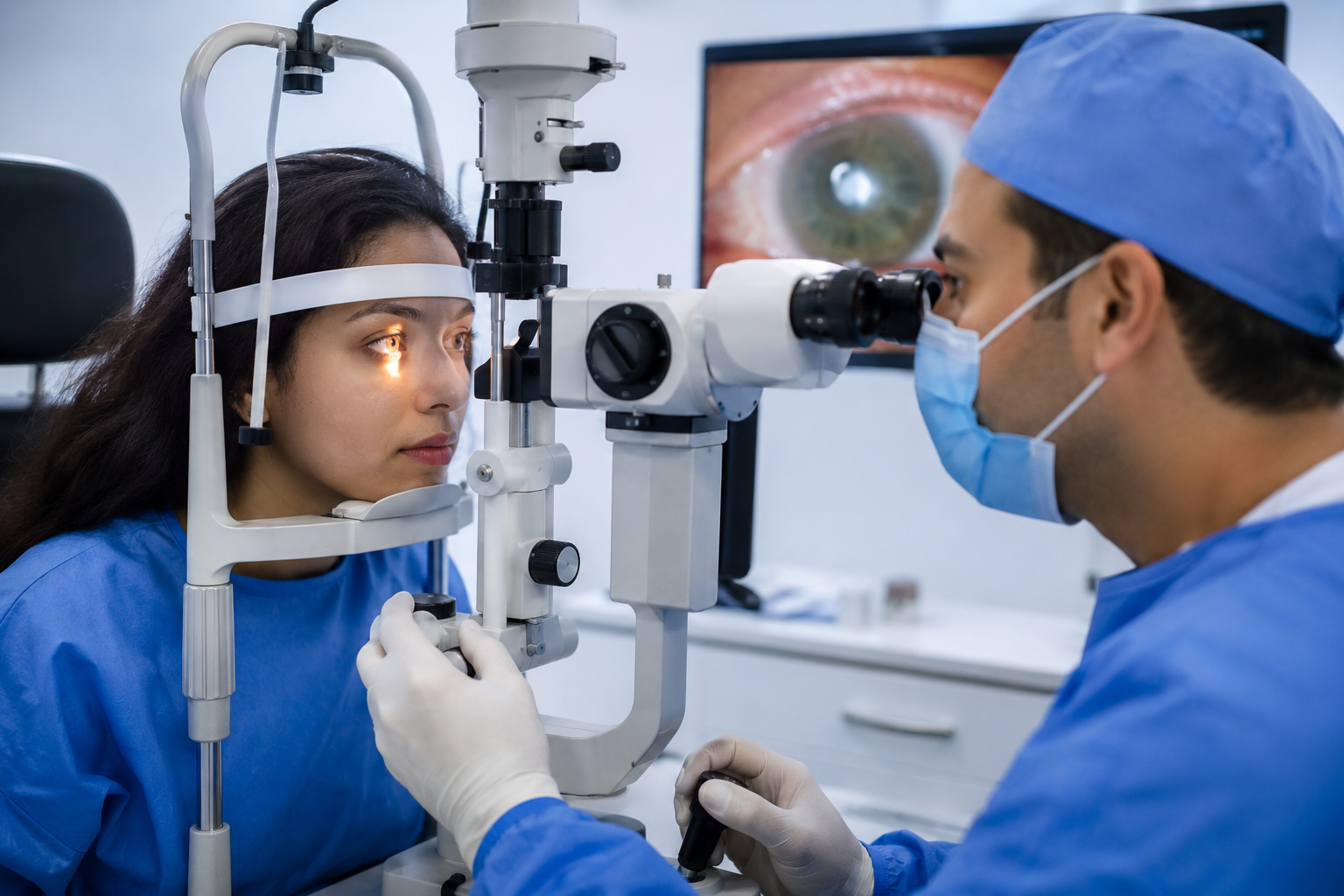
About Diabetic Eye Disease
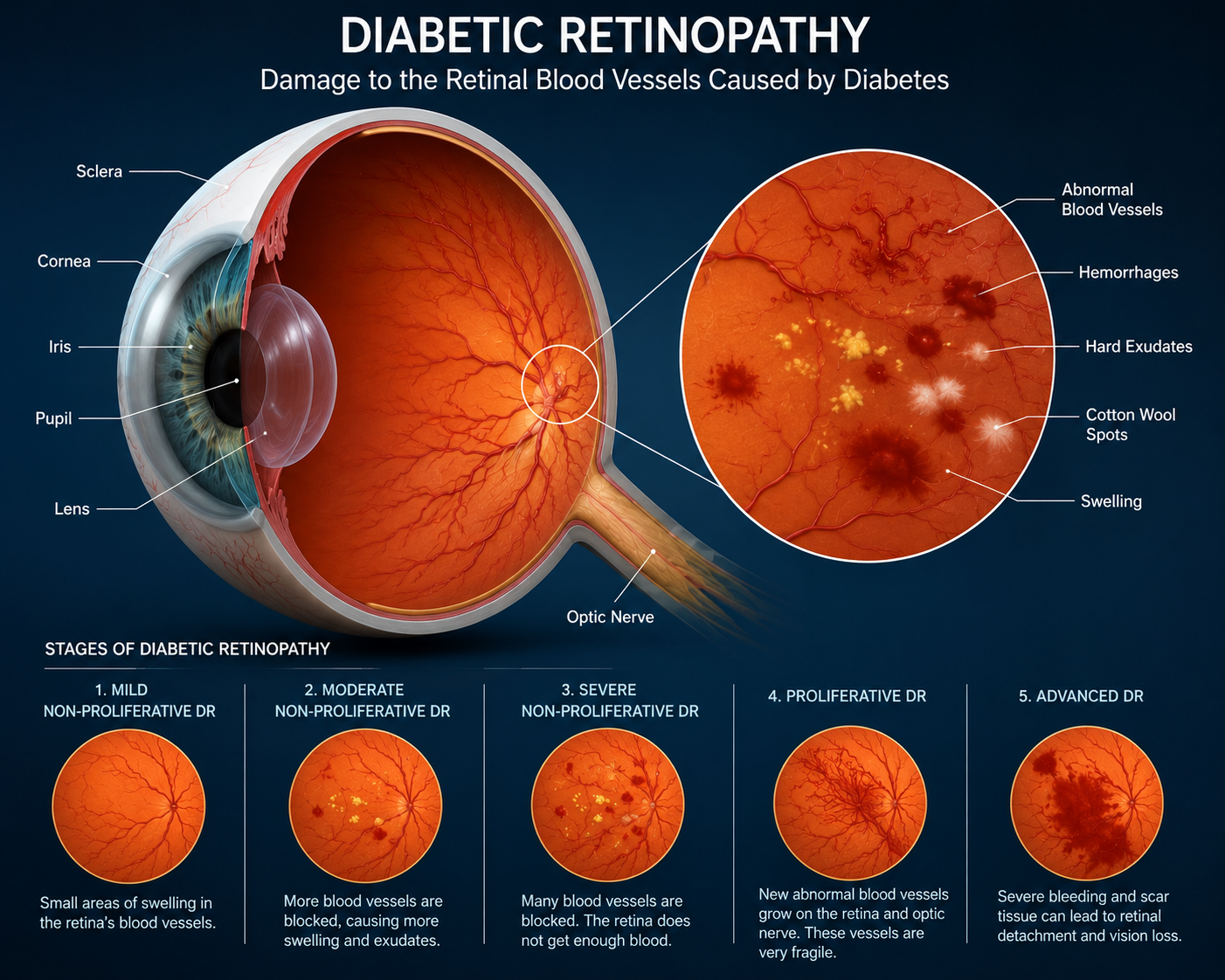
We provide comprehensive diabetic eye assessments including visual acuity, dilated fundus examination, OCT and retinal photography. The severity of diabetic retinopathy is classified and management planned accordingly.
Early non-proliferative retinopathy is monitored carefully, with optimisation of systemic risk factors (glucose, blood pressure, lipids) playing a central role. Sight-threatening diabetic macular oedema is treated with intravitreal anti-VEGF injections or steroid implants. Proliferative retinopathy requires pan-retinal photocoagulation and, where vitreous haemorrhage or traction detachment has occurred, vitreoretinal surgery.
Key Benefits
Comprehensive Screening
Dilated fundus examination, OCT and retinal photography to detect and grade diabetic retinopathy precisely.
Anti-VEGF Therapy
Intravitreal injections are the most effective treatment for sight-threatening diabetic macular oedema.
Surgical Expertise
Vitreoretinal surgery for advanced proliferative retinopathy, vitreous haemorrhage and traction retinal detachment.
Multidisciplinary Approach
We work alongside endocrinologists and GPs to optimise systemic diabetic control alongside ophthalmic treatment.